
EOFY Panic? 10 Things Every Small Business Should Do Before 30 June

As the end of the financial year approaches, many small business owners find themselves rushing to organise paperwork, reconcile accounts and prepare information for their accountant.
The good news is that a little preparation now can save a lot of stress later.
Whether you operate as a sole trader, company, partnership or trust, completing a few important bookkeeping tasks before 30 June can make tax time much easier and help ensure your financial records are accurate.
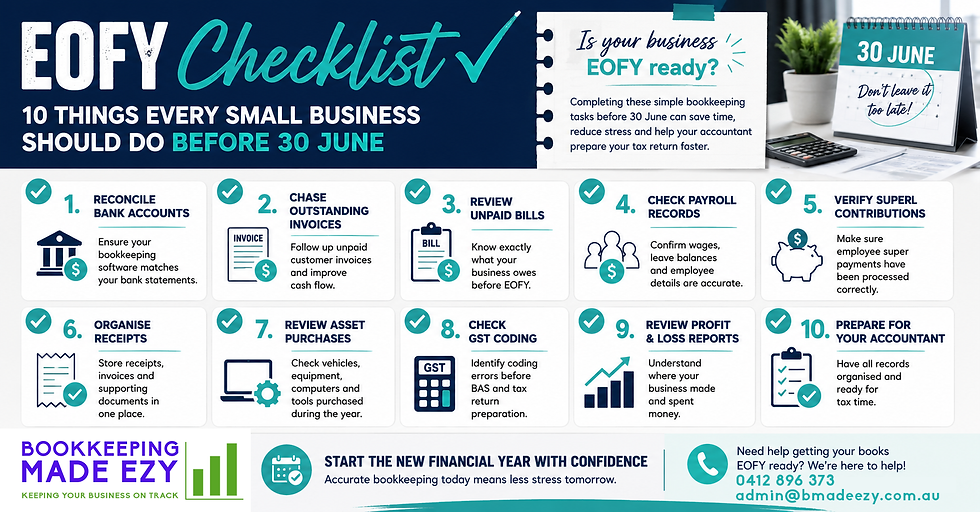
1. Reconcile Your Bank Accounts
One of the most important EOFY tasks is ensuring your bookkeeping software matches your bank statements.
Reconciliation helps identify missing transactions, duplicated entries and coding errors before they become bigger problems.
2. Chase Outstanding Invoices
Review your accounts receivable and follow up overdue customer invoices.
Collecting outstanding debts before the end of the financial year can improve cash flow and provide a clearer picture of your business's financial position.
3. Review Unpaid Supplier Bills
Take time to review outstanding bills and expenses.
Knowing exactly what your business owes helps ensure your financial reports accurately reflect your liabilities.
4. Check Payroll Records
Verify that employee wages, leave balances and payroll records are correct.
Small payroll errors can create larger problems when preparing payment summaries and meeting reporting obligations.
5. Confirm Superannuation Payments
Superannuation contributions should be reviewed carefully.
Late super payments may not be tax deductible in the financial year you intended, making this an important EOFY check.
6. Organise Your Receipts and Supporting Documents
Make sure receipts, invoices and expense records are properly stored and accessible.
Having complete records helps support deductions and reduces the likelihood of missing legitimate business expenses.
7. Review Asset Purchases
Have you purchased equipment, vehicles, computers or tools during the year?
Ensure these purchases have been correctly recorded and discuss any depreciation considerations with your accountant.
8. Check GST Coding
Incorrect GST coding is one of the most common bookkeeping issues we encounter.
Reviewing transactions before EOFY can help avoid BAS amendments and reduce accounting costs later.
9. Review Your Profit and Loss Report
Take a close look at your income and expenses.
Understanding where your business earned money and where it spent money can help you make better decisions for the year ahead.
10. Prepare EOFY Small Business Information for Your Accountant
The more organised your small business EOFY records are, the faster and more cost-effective your accountant can prepare your tax return.
Providing complete and accurate information also helps identify opportunities for legitimate tax savings.
Don't Leave It Until The Last Minute
EOFY does not need to be stressful.
By taking action before 30 June, you can improve the accuracy of your financial records, reduce surprises and start the new financial year with confidence.
If you're feeling overwhelmed or simply don't have the time, Bookkeeping Made Ezy can help get your books organised and EOFY ready.
Call or email me today on 0412 896 373 or admin@bmadeezy.com.au and let me help take the stress out of EOFY.


Comments