
Superannuation Shake-Up From 1 July 2026: Payday Super Changes Small Business Owners Must Do Now

A major change to how superannuation is paid is coming that will affect more than 14 million Australian workers and thousands of small businesses — and many employers still don’t realise what’s coming.
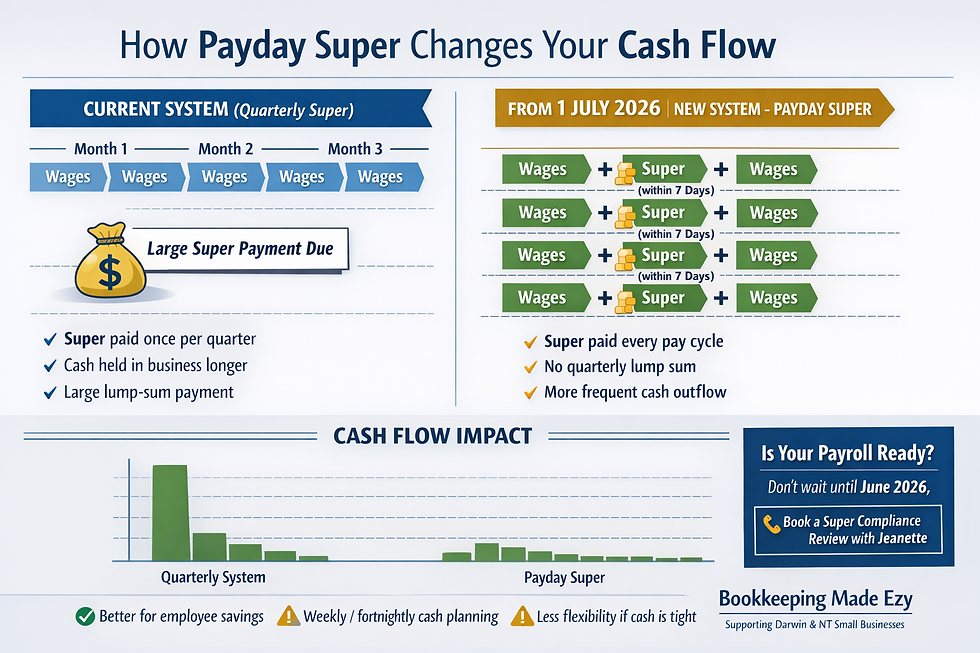
From 1 July 2026, employers will no longer be able to wait until quarterly deadlines to make super contributions for staff. Instead, you must pay superannuation at the same time you pay wages — and the money must reach the employee’s super fund within seven business days of payday.
This may sound like a technical compliance update — but in practice it’s one of the biggest payroll shifts in decades.
What are Payday Super Changes (And Why It Matters to Your Business)
1. Super Must Be Paid With Each Pay Cycle
Under the new “payday super” rules changes:
Super contributions are due in sync with your payroll — not at the end of the quarter.
Funds must be received by the super fund within 7 business days of payday.
⚠️ Why this matters: If contributions arrive late, the penalties can be severe — including interest and fines of up to 60 per cent of the shortfall.
This isn’t a suggestion — it’s a firm deadline in the ATO’s compliance calendar.
2. Most Employers Aren’t Ready
Research shows that up to 58 per cent of employers are still unaware of the new payday super changes and haven’t updated their systems.
That means if your payroll or accounting processes haven’t been reviewed recently:
You could be making super payments late without even realising it.
Your payroll software might need setup changes to automatically trigger super payments at the right time.
Your cash flow planning could change — especially in tight months.
Small business owners are already sounding the alarm, saying the change could create cash flow challenges if you’re not prepared.
You do NOT want to be one of them.
What Small Business Employers Should Do Now
Here’s a practical action plan to get ready:
✅ 1. Talk to Your Accountant or Payroll Provider
Ask whether your current system can:
✔ Automatically process super when wages are paid
✔ Send contributions electronically within 7 business days
✔ Produce reports that show compliance ready for an ATO audit
✅ 2. Review Your Cash Flow Forecasts
Super payments will be more frequent. Ensure your cash flow:
💡 Can absorb weekly or fortnightly super outflows
💡 Has contingencies for months with extra pays (e.g. bonuses)
✅ 3. Update Employment Agreements & Payroll Policies
Ensure your contracts and internal policies:
Reflect the new super payment timing
Are transparent to employees about when funds are being transferred
✅ 4. Train Your Team
Payroll or HR staff need to understand:
🔹 What payday super means
🔹 When payments are due
🔹 How to check for missed or delayed contributions
Why This Change Isn’t Just A Compliance Headache
There’s a broader purpose behind it.
Employees get super into their fund sooner, giving their retirement savings more time to grow. For younger workers, this can have a meaningful impact over the course of decades.
However, for small business owners, the administrative shift is substantial, and the penalties for getting it wrong aren’t lenient.
That’s why you shouldn’t wait until June 2026 to act.
Don’t Leave This Until It’s Too Late — Contact Jeanette Today
Getting payday super right means:
✔ Peace of mind
✔ Avoiding fines and penalties
✔ Properly supporting your team
✔ Keeping your business compliant and audit-ready
If you’re not 100 % confident your payroll and super processes are ready for this change, it’s time to talk to someone who understands both compliance and your business needs.
Contact Jeanette as soon as possible — she can help you:
Review your current payroll setup
Update your systems and policies
Train your team
Plan cash flow for the timing shift
Getting professional help now could save your business time, stress, and money down the track.
Key Takeaways
The payroll timing for superannuation is changing from 1 July 2026.
Payments must be made every pay cycle, within 7 days of payday.
Penalties are significant for late or missed payments.
Many small businesses haven’t prepared yet — don’t be one of them.
Contact Jeanette now to get payroll compliance sorted before the deadline.


Comments